The Breaking Point: British Columbia’s Historic Waitlist Crisis
The healthcare landscape in Canada is currently facing unprecedented challenges, pushing citizens to seek alternative solutions for their deteriorating health conditions. According to the latest reports detailed in the Official News Source, the backlog of patients in British Columbia alone has reached an astonishing milestone. With waitlists ballooning, individuals requiring major orthopedic interventions are left entirely in limbo, enduring daily agony without a clear timeline for surgical relief.
For a patient requiring a total knee replacement, waiting is not merely an inconvenience; it is a progressive deterioration of their quality of life. Bone-on-bone friction causes excruciating pain, limits mobility, and frequently leads to severe secondary complications such as hip misalignment, lower back pain, and profound psychological distress. The promise of universal healthcare falls dramatically short when the access to that care is delayed by years, prompting an exodus of Canadian patients looking southward to reclaim their physical independence.
Why Mexico is the Top Choice for Canadian Orthopedic Patients
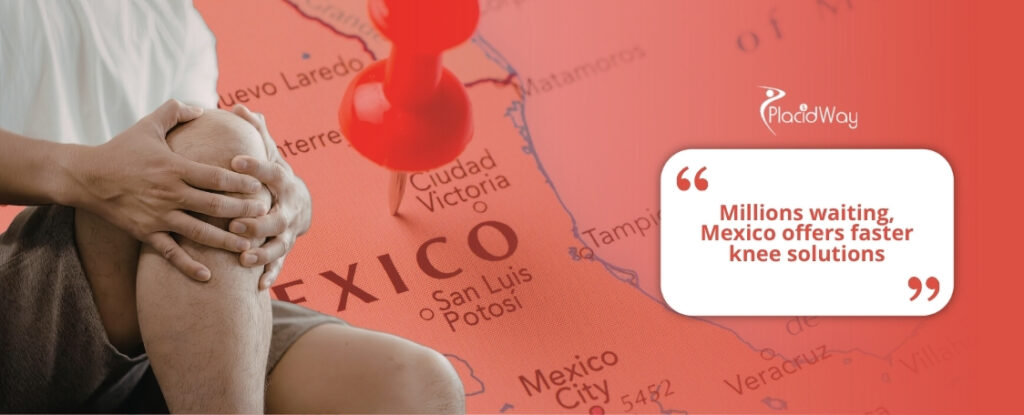
While medical tourism is a global phenomenon, Mexico has rapidly secured its position as the premier destination for Canadians seeking total knee arthroplasty. The geographical proximity plays a significant role; short, direct flights from major Canadian hubs like Vancouver, Calgary, and Toronto transport patients to leading medical centers in a matter of hours. This eliminates the physical toll of long-haul international travel, which is a critical consideration for individuals with severe joint degradation and compromised mobility.
Beyond simple logistics, there has been a massive cultural shift regarding how healthcare in Mexico is perceived. Patients are discovering that top-tier private healthcare facilities in Mexico rival, and often exceed, the amenities and immediate availability found in North America. By focusing heavily on the medical tourist demographic, these destinations have tailored their infrastructure to provide English-speaking staff, VIP concierge services, and integrated travel support, transforming a daunting medical procedure into a highly organized, patient-centric experience.
Did You Know?
While the average wait time for a total knee replacement in some Canadian provinces can exceed 18 to 24 months from the time of referral, patients traveling to Mexico can typically schedule their surgery within two to four weeks. This drastic reduction in wait time prevents further joint degradation and allows patients to return to their normal lives years ahead of schedule.
Understanding the Economics of Total Knee Replacement in Mexico
The financial reality of the Canadian healthcare backlog forces many into a difficult corner. While the surgery itself would theoretically be covered by the provincial health plan, the hidden costs of waiting are astronomical. Patients frequently endure years of lost wages, out-of-pocket expenses for pain management, and extensive physiotherapy that offers diminishing returns. When turning to the private sector within Canada or the United States, patients are often met with invoices exceeding fifty thousand dollars for a single joint replacement.
In stark contrast, the medical ecosystem in Mexico operates on a much different economic scale, allowing world-class care to be delivered at a fraction of the cost. Patients can expect to save up to seventy percent compared to private North American rates, even when factoring in the cost of flights, premium accommodations, and personalized post-operative care. This cost-efficiency is not achieved by cutting corners, but rather through lower administrative overhead, favorable exchange rates, and tort reform that drastically reduces the cost of medical malpractice insurance for surgeons.
| Healthcare Factor | Public Canadian System | Private Mexican Facilities |
|---|---|---|
| Wait Time for Consultation | 6 to 12 Months | Immediate (Virtual) |
| Wait Time for Surgery | 12 to 24+ Months | 2 to 4 Weeks |
| Hidden Costs | Lost wages, pain meds | None (All-inclusive packages) |
| Choice of Prosthetic | Standard hospital issue | Premium, patient-selected |
Industry Implications: The Shift Toward Borderless Healthcare
The unprecedented migration of patients seeking orthopedic interventions has profound implications for the global healthcare industry. Medical tourism is no longer confined to elective aesthetic procedures or dental work. It has fundamentally evolved into a lifeline for essential, life-altering surgeries. As public health systems buckle under the weight of aging populations and administrative inefficiencies, the private international sector is stepping up to fill the void.
“The current crisis in the Canadian healthcare system is forcing a fundamental reevaluation of how and where patients receive care. Total knee replacement medical tourism from Canada to Mexico skyrockets as BC waitlists hit 1.2 million patients, proving that borders are no longer a barrier to medical necessity. Patients are taking control of their health timelines, seeking out internationally accredited excellence rather than accepting a life defined by pain and endless waiting.”
– Pramod Goel, CEO of PlacidWay
This structural shift demands that destinations providing these services maintain the highest possible standards. The surge in demand acts as a catalyst for continuous improvement in medical technologies, facility infrastructure, and patient management protocols within the host country, driving a competitive, quality-focused global healthcare market.
Quality of Care: Board-Certified Expertise South of the Border
A lingering misconception regarding cross-border healthcare is the assumption of compromised quality. This narrative is rapidly being dismantled by the rigorous standards upheld by modern Mexican surgical centers. Facilities catering to Canadian and American patients frequently boast international accreditations, ensuring their sterilization protocols, operating theater technologies, and patient safety guidelines mirror or exceed those found in premier North American hospitals.
Furthermore, the orthopedic surgeons performing these procedures are highly esteemed within the global medical community. A vast majority have undergone extensive fellowships in the United States, Canada, or Europe. They are heavily experienced in the latest surgical techniques, including minimally invasive arthroplasty and robotic-assisted joint replacements. By utilizing top-tier, FDA-approved prosthetic implants, these surgeons ensure the longevity and functionality of the new joint, providing patients with total peace of mind regarding the safety and efficacy of their procedure.
The Patient Journey: From Long Waitlists to Immediate Action
Making the decision to travel for a major surgery can feel overwhelming, but the actual process has been meticulously refined to ensure a stress-free experience. Facilitators and destination medical centers work in tandem to orchestrate every detail, allowing the patient to focus entirely on their health and impending recovery. The pathway from chronic pain to successful intervention is heavily structured and highly transparent.
The typical journey for a Canadian patient navigating a total knee replacement abroad involves several highly coordinated steps designed to maximize safety and efficiency:
- Comprehensive Telemedicine Consultation: Initial meetings are conducted via secure video calls, allowing surgeons to review local X-rays, MRI scans, and medical histories to confirm surgical candidacy.
- Logistical Coordination: Every aspect of travel, including flights, ground transportation in specialized vehicles, and accessible hotel accommodations, is pre-arranged.
- Pre-Operative Clearances: Upon arrival, patients undergo rigorous physical examinations, blood work, and cardiological evaluations to ensure they are optimal candidates for general or spinal anesthesia.
- The Surgical Intervention: The joint replacement is performed in a state-of-the-art operating theater, followed by a closely monitored stay in a private recovery suite.
- Immediate Physical Therapy: Mobilization begins within twenty-four hours of surgery, guided by dedicated inpatient physiotherapists to prevent complications and initiate joint flexion.
- Fit-to-Fly Certification: Following adequate recovery and suture inspection, patients are officially cleared by their surgical team to return to Canada safely.
Did You Know?
Many international medical centers utilize advanced multimodal pain management protocols that significantly reduce the reliance on heavy narcotics post-surgery. This modern approach leads to fewer side effects, faster cognitive recovery, and allows patients to engage more actively in the crucial early stages of their physical rehabilitation.
Post-Operative Rehabilitation and Recovery in a Warm Climate
The success of a total knee replacement is heavily dependent on the quality of post-operative rehabilitation. One of the distinct advantages of undergoing this procedure in Mexico is the environment in which patients recover. Escaping the harsh, icy, and slippery conditions of a Canadian winter drastically reduces the risk of post-operative falls and accidents. Warm, temperate climates naturally improve blood circulation and help alleviate joint stiffness, providing an ideal biological environment for tissue healing.
Moreover, many patients opt to extend their stay in specialized recovery retreats rather than rushing home. These dedicated facilities offer daily, personalized physical therapy sessions, continuous nursing care, and medically tailored nutrition. Recovering in a serene, stress-free environment allows patients to cross the most difficult thresholds of post-operative pain and mobility challenges under the watchful eyes of professionals, returning to Canada only when they are confidently walking and well on their way to full independence.
How PlacidWay Facilitates the Shift for Canadian Patients
Navigating the expansive world of medical tourism requires a trusted partner to ensure safety, quality, and transparency. PlacidWay serves as the essential bridge for Canadians looking to bypass insurmountable waitlists. By strictly vetting international medical facilities, surgeons, and care protocols, PlacidWay removes the guesswork and anxiety from the equation. Patients are connected exclusively with board-certified orthopedic specialists who possess proven track records of excellence with international clienteles.
The platform offers comprehensive support tailored specifically to the needs of the orthopedic patient. From obtaining initial transparent price quotes to facilitating the transfer of medical records and coordinating virtual consultations, PlacidWay ensures that every individual is fully informed and comfortable before making any commitments. This advocacy provides a vital layer of security, ensuring that patients receive the exact standard of care promised to them.
Ultimately, suffering through chronic knee pain while waiting in line is a choice that is rapidly losing its justification. The robust, highly regulated medical tourism infrastructure in Mexico offers a safe, immediate, and economically viable alternative. Through meticulous planning and the guidance of seasoned facilitators, Canadians are successfully bypassing systemic healthcare failures, undergoing transformative total knee replacements, and stepping confidently back into their active lives.
Stop Waiting in Pain. Reclaim Your Mobility Today.
Don’t let a 1.2 million patient waitlist dictate your quality of life. Discover safe, affordable, and immediate total knee replacement options with internationally accredited orthopedic surgeons.