TITLE: 1.2 Million Waitlisted: Why Total Knee Replacement Medical Tourism From Canada to Mexico is Skyrocketing
—SEPARATOR—
1.2 Million Waitlisted: Why Total Knee Replacement Medical Tourism From Canada to Mexico is Skyrocketing
The stark reality of the Canadian healthcare system is driving a mass exodus of orthopedic patients seeking immediate relief abroad. According to the Official News Source, the surge in medical tourism for total knee replacement procedures highlights a fundamental shift in how citizens approach their personal health and physical longevity. Instead of accepting years of immobility, patients are taking proactive steps to reclaim their quality of life.
The Breaking Point: British Columbia’s Orthopedic Crisis
The healthcare infrastructure in British Columbia is currently facing an unprecedented bottleneck. With waitlists ballooning to 1.2 million patients across various medical disciplines, orthopedic surgeries have been disproportionately affected. In the Canadian public health model, joint replacements are officially categorized as “elective” procedures. This bureaucratic classification implies that the surgery is not a matter of life and death, allowing hospital administrators to indefinitely postpone these operations to prioritize emergency cases.
However, for the individual living with bone-on-bone osteoarthritis, a knee replacement is anything but elective. The wait times for an initial consultation with an orthopedic surgeon can take up to a year, followed by another staggering wait of eighteen to twenty-four months just to secure a date in the operating room. This systemic delay has left countless active seniors, working professionals, and parents entirely incapacitated, watching their golden years slip away while trapped in an overburdened queuing system.
In the context of public healthcare, an “elective” surgery does not mean optional. It simply means the procedure can be scheduled in advance without immediate risk to the patient’s life. Unfortunately, this definition fails to account for the severe, chronic pain and rapid loss of mobility that osteoarthritis patients suffer daily.
The Physical and Mental Toll of Waiting for Surgery
The human body is an interconnected biomechanical machine. When one joint fails, the entire system compensates, leading to a cascade of secondary health issues. As Canadian patients wait years for a total knee replacement, their altered gait places immense, unnatural stress on their healthy knee, their hips, and their lower back. What begins as an isolated knee issue frequently devolves into widespread musculoskeletal degradation, meaning that by the time the patient finally receives their public surgery, they may already require interventions on other joints.
Beyond the physical deterioration, the psychological burden of a multi-year waitlist is profound. Chronic pain severely disrupts sleep patterns, leading to chronic fatigue and a weakened immune system. The inability to climb stairs, walk the dog, or play with grandchildren often results in severe social isolation and clinical depression. Patients find their worlds shrinking rapidly, confined to their homes while relying heavily on pain management medications that carry their own risks of dependency and gastrointestinal side effects.
Mexico Emerges as the Premier Orthopedic Destination
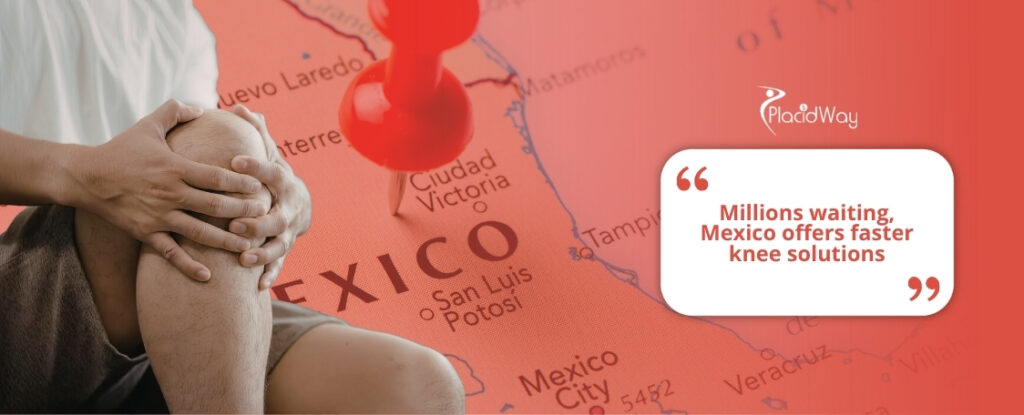
Faced with the bleak prospect of prolonged suffering, a massive wave of Canadians has turned their gaze southward. Mexico has strategically positioned itself as a global powerhouse in medical tourism, particularly in the field of advanced orthopedics. Unlike regional hospitals in Canada that are struggling with staffing shortages and outdated equipment, premier medical centers in Mexico have invested billions of dollars into creating state-of-the-art facilities designed specifically to cater to international patients.
The geographic proximity of Mexico makes it an ideal destination for Canadian travelers. Short, direct flights from major Canadian hubs mean that patients do not have to endure grueling long-haul travel with a compromised joint. Furthermore, platforms like PlacidWay have revolutionized the accessibility of these overseas options, meticulously vetting medical facilities and providing patients with a transparent, secure, and highly organized pathway to receive world-class surgical care without the devastating wait times.
“The monumental waitlists we are witnessing in British Columbia are a clear indicator that localized healthcare models are reaching their absolute limits. We are seeing a paradigm shift where patients are no longer willing to surrender their mobility and happiness to bureaucratic delays. By seeking total knee replacements in Mexico, Canadians are embracing a borderless approach to healthcare, prioritizing immediate, high-quality medical intervention facilitated by trusted platforms like PlacidWay.”
— Pramod Goel, CEO of PlacidWay
Cost Analysis: Total Knee Replacement Economics
A common misconception regarding medical tourism is that patients travel strictly for budget reasons. While it is true that out-of-pocket medical procedures are significantly more affordable in Mexico compared to the United States, for Canadians, the calculation is different. In Canada, the procedure is theoretically “free” under the public health system. However, the hidden costs of waiting are exorbitant. Lost wages from an inability to work, massive expenditures on private physiotherapy and pain medication, and the cost of hiring domestic help or caregivers over a two-year period far outweigh the price of traveling abroad.
When calculating the true economic impact of delayed surgery, the value proposition of medical tourism becomes undeniable. Below is an analytical breakdown of the overarching factors driving the economic decision for Canadian patients:
| Healthcare Factor | Public System (British Columbia) | Medical Tourism (Mexico) |
|---|---|---|
| Average Wait Time | 18 to 24 Months | 2 to 4 Weeks |
| Hidden Waiting Costs | High (Lost wages, medications, home modifications) | None (Immediate intervention) |
| Surgical Technology | Standard traditional instrumentation | Advanced robotic-assisted options available |
| Post-Op Hospital Stay | Discharged within 24 to 48 hours | Extended inpatient recovery care included |
The Quality of Care and International Accreditation Standards
The primary concern for any patient contemplating medical travel is the safety and quality of the care they will receive. The medical centers in Mexico that specialize in international patients operate under strict, internationally recognized accreditations. These overarching global standards ensure that infection control protocols, surgical methodologies, and patient safety measures meet or exceed those found in premier North American hospitals.
Furthermore, the materials used in total knee replacements—such as the titanium and highly cross-linked polyethylene prosthetic joints—are sourced from the exact same industry-leading, global manufacturers used by Canadian surgeons. Many orthopedic specialists operating in Mexico’s medical tourism hubs have completed international fellowships, bringing advanced, minimally invasive techniques and robotic-assisted surgical expertise directly to their patients. This combination of top-tier materials and elite surgical skill results in outstanding clinical outcomes.
Medical tourism destinations in Mexico are not just general hospitals; many are highly specialized orthopedic institutes. Because they cater to a global clientele, the surgical teams frequently perform a significantly higher volume of joint replacements annually compared to local regional surgeons, leading to highly refined expertise and lower complication rates.
The Logistical Simplicity of Medical Tourism for Canadians
Navigating healthcare in a foreign country may sound daunting, but the medical tourism industry has evolved to offer a frictionless, all-inclusive experience. Facilitators like PlacidWay ensure that every aspect of the journey is meticulously coordinated. Here is how the streamlined process generally unfolds for a Canadian patient traveling for a total knee replacement:
- Comprehensive Virtual Consultations: Patients share their x-rays, MRI scans, and medical history digitally for a thorough evaluation by the prospective surgical team before ever booking a flight.
- Dedicated Patient Coordination: Bilingual case managers are assigned to handle all logistics, eliminating any potential language barriers and ensuring seamless communication between the patient and the medical staff.
- End-to-End Travel Logistics: Medical tourism packages routinely cover all ground logistics, including VIP airport pickups in specialized vehicles designed for passengers with limited mobility.
- Rigorous Pre-Operative Clearances: Upon arrival, patients undergo a battery of in-person preoperative tests, including cardiovascular evaluations and extensive blood work, ensuring they are fully optimized for surgery.
- Integrated Follow-up Planning: Before returning to Canada, patients receive a detailed continuum of care plan, comprehensive medical records translated into English, and a clear schedule for physical therapy.
Post-Operative Rehabilitation and Recovery Abroad
Orthopedic surgeons universally agree that the success of a total knee replacement is heavily dependent on the quality of post-operative rehabilitation. In the Canadian public system, hospital beds are at a premium. Consequently, patients are often discharged and sent home within twenty-four hours of major joint surgery, leaving them to manage intense pain and early mobilization with minimal professional oversight.
Conversely, the medical tourism model in Mexico is built around comprehensive recovery. Patients typically remain under continuous medical supervision for several days post-surgery. This extended inpatient stay allows for superior pain management, daily monitoring of the surgical incision to prevent infection, and immediate, supervised physical therapy. Many patients opt to transition from the hospital to specialized medical recovery retreats, where skilled physical therapists help them achieve crucial early range-of-motion milestones before they board their flight home to Canada.
The Future of Cross-Border Healthcare Solutions
The 1.2 million patients waiting for care in British Columbia represents a critical turning point in global healthcare dynamics. As local systems continue to buckle under demographic pressures and staffing shortages, the traditional reliance on state-provided medical care is being fundamentally challenged. Medical tourism is rapidly transitioning from a niche, alternative choice into a mainstream, essential strategy for life preservation and wellness management.
By democratizing access to top-tier orthopedic interventions, destinations like Mexico are offering immediate hope to those abandoned by administrative backlogs. Organizations like PlacidWay stand at the forefront of this movement, ensuring that crossing borders for health remains a safe, transparent, and highly effective endeavor. For the Canadian patient trapped on an endless waitlist, a new knee and a renewed lease on life are no longer years away—they are just a flight away.
Stop Waiting and Start Living Again
Don’t let endless waitlists dictate your quality of life. Discover safe, affordable, and immediate world-class total knee replacement options tailored specifically for you.