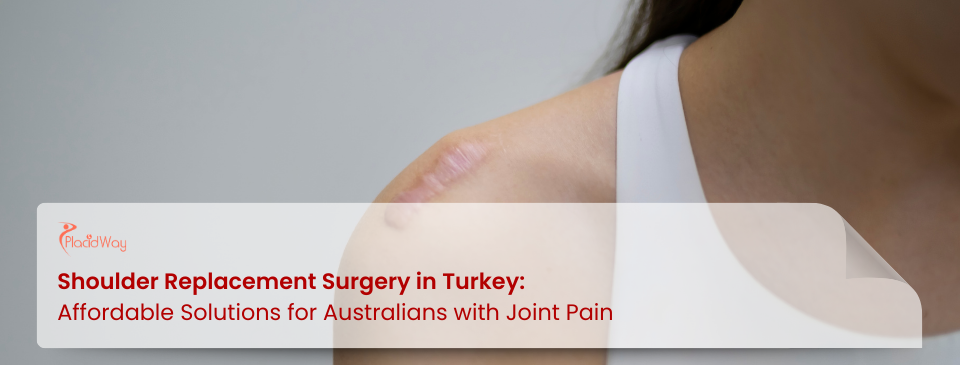
Shoulder replacement surgery in Turkey offers a compelling and cost-effective solution for Australians experiencing severe joint pain and limited mobility. With internationally accredited hospitals and expert surgeons, Turkey has become a leading medical tourism destination. Patients from Australia can save 50% to 70% on the total cost of surgery compared to home.
Chronic shoulder pain significantly impacts daily life, making simple tasks challenging and affecting sleep quality. For many Australians, the prospect of undergoing shoulder replacement surgery at home is daunting due to high costs and lengthy waiting lists. This has led a growing number of individuals to seek high-quality, affordable alternatives abroad.
Turkey has emerged as a premier destination for medical tourism, renowned for its advanced healthcare infrastructure and highly skilled orthopedic surgeons. Patients traveling from Australia can access world-class care, state-of-the-art facilities, and significantly reduce their financial burden. This comprehensive guide will explore why so many Australians are choosing Shoulder Replacement Surgery in Turkey: Affordable Solutions for Australians with Joint Pain, outlining the procedure, cost benefits, recovery expectations, and essential considerations for a smooth medical journey.
We aim to provide authentic, trustworthy information to help you make informed decisions about your health and well-being. This article will help you understand the benefits and potential considerations of choosing Turkey for your shoulder arthroplasty, ensuring clarity and confidence every step of the way.
What Key Benefits Can Australians Find in Turkish Shoulder Replacement?
- Cost Savings: Patients from Australia can save 50% to 70% on the total cost of shoulder replacement surgery in Turkey.
- All-Inclusive Packages: Many Turkish clinics offer comprehensive packages covering surgery, hospital stay, post-operative care, accommodation, and transfers.
- World-Class Medical Care: Access internationally accredited hospitals and highly skilled orthopedic surgeons using state-of-the-art technology.
- Reduced Waiting Times: Avoid long public health system waiting lists in Australia, enabling quicker access to necessary treatment.
- Advanced Technology: Benefit from facilities equipped with 3D-guided surgical planning and globally recognized implant brands like Zimmer Biomet and Stryker.
What Exactly is Shoulder Replacement Surgery and How Does it Work?
Shoulder replacement surgery, also known as shoulder arthroplasty, is a medical procedure designed to alleviate severe shoulder pain and restore function in a damaged joint. It involves replacing parts of the shoulder with prosthetic implants.
The shoulder is a complex ball-and-socket joint, susceptible to various conditions causing chronic pain and limited mobility. Common culprits include osteoarthritis, a “wear and tear” condition where cartilage breaks down, and rheumatoid arthritis, an autoimmune inflammatory disease. Rotator cuff tear arthropathy and avascular necrosis, which is bone tissue death due to insufficient blood supply, also necessitate surgery. Severe fractures of the upper arm bone (humerus) that are irreparable through other means are also a major indication for this procedure. When non-surgical treatments like medication, physical therapy, and steroid injections fail to provide relief, shoulder joint replacement becomes a necessary and highly effective solution for improving quality of life.
During the surgery, a skilled orthopedic surgeon makes an incision to access the joint. The damaged “ball” (humeral head) is removed and replaced with a metal ball attached to a stem, which is inserted into the humerus. If the “socket” (glenoid) is also compromised, it is resurfaced with a smooth plastic component. The procedure takes approximately two to three hours. Post-surgery, the surrounding soft tissues are carefully repositioned, and the incision is closed, paving the way for recovery and rehabilitation.
What are the Success Rates and Potential Risks of Shoulder Replacement?
Evidence & Outcomes: Modern shoulder replacement procedures boast high success rates in alleviating pain and restoring function. A significant benefit of contemporary prosthetic implants is their remarkable longevity; the vast majority of shoulder replacements are designed to last for 15 to 20 years or even longer, offering a durable solution to chronic joint pain. Turkish clinics, in particular, are equipped with state-of-the-art technology, including 3D-guided surgical planning, which enhances precision and leads to superior outcomes. These facilities utilize globally recognized implant brands such as Zimmer Biomet and Stryker, ensuring that the quality of materials meets international standards. Patients can expect a permanent fix for their shoulder issues, backed by advanced medical practices and high-quality prosthetics.
Risks & Contraindications: Like any major surgical procedure, shoulder replacement carries inherent risks, though these are typically minimal in reputable clinics. Potential complications include infection, which is mitigated by sterile surgical environments and post-operative antibiotics, and nerve damage, a very rare complication minimized by experienced surgeons. Blood clots are prevented through early mobilization and, if necessary, blood-thinning medication. Implant loosening is a long-term risk managed by precise surgical technique and patient adherence to post-operative guidelines. Individual results can vary significantly, and this information should not be taken as a guarantee of specific outcomes. It is crucial for all patients to consult with a qualified healthcare professional to discuss their individual medical history, potential contraindications, and to receive personalized advice before making any treatment decisions. Be aware of severe pain, redness, swelling, or fever as potential warning signs after surgery, and seek immediate medical attention if these occur.
Did you know that Turkey is home to some of the world’s most advanced medical facilities, where patients often save 50% to 70% on shoulder replacement surgery while receiving care that meets or exceeds international hospital standards?
How Does the Cost of Shoulder Replacement in Turkey Compare to Australia and Beyond?
The stark cost difference between shoulder replacement surgery in Turkey and countries like Australia is a primary driver for medical tourism. While quality of care remains paramount, the ability to achieve significant savings without compromising on standards makes Turkey an attractive option. A comprehensive shoulder replacement package in Turkey typically ranges from $8,000 to $15,000 AUD, often including the surgery, hospital stay, and initial post-operative care. In contrast, out-of-pocket expenses for the same procedure in Australia can soar to $25,000 to $45,000 AUD or even higher, depending on insurance coverage and specific hospital fees.
Cost Breakdown
Major Savings
| Country | Estimated Cost (AUD) | Average Savings vs. Turkey |
|---|---|---|
| Turkey | $8,000 – $15,000 | Starting Point Best Value |
| United States | $40,000 – $70,000 | ~74% Savings |
| United Kingdom | $25,000 – $50,000 | ~69% Savings |
| Canada / Australia | $25,000 – $45,000+ | ~67% Savings |
Essential Facts & Pro-Tips
What is the Typical Shoulder Replacement Journey in Turkey?
The shoulder replacement journey in Turkey is meticulously designed for international patients, ensuring a smooth and successful experience from start to finish. The process prioritizes patient safety and comfort while maximizing clinical efficiency. From initial assessment to post-operative follow-ups, every step is carefully coordinated to meet the needs of those traveling for care. This structured approach allows patients to focus on their recovery with peace of mind.
Frequently Asked Questions About Shoulder Replacement in Turkey
1. How long do I need to stay in Turkey for shoulder replacement surgery?+
You will typically need to stay in Turkey for 1-3 days in the hospital after surgery. For initial recovery and post-operative check-ups, a total stay of about 7-10 days in the country is usually recommended before you fly back home to Australia. This allows for sufficient monitoring and early rehabilitation.
2. Is physical therapy included in the shoulder replacement package?+
Most comprehensive shoulder replacement packages in Turkey include initial physical therapy sessions conducted at the hospital. Before your departure, the clinic will provide you with a detailed and personalized exercise plan. This plan is designed to guide your continued rehabilitation once you return home to Australia, ensuring a smooth recovery process.
3. What is the difference between a total shoulder replacement and a reverse shoulder replacement?+
A standard total shoulder replacement is typically performed for patients with a healthy rotator cuff. In this procedure, both the ball and the socket components of the joint are replaced. A reverse total shoulder replacement, however, is designed for patients with a severely damaged rotator cuff, where the implant’s ball and socket components are switched to allow different muscles to power arm movement.
4. What is the typical recovery timeline for shoulder replacement surgery?+
The initial recovery period usually lasts about 6 weeks, during which you will wear a sling to protect the new joint. Most patients can gradually return to light, daily activities after this phase. Full recovery and the ability to resume more strenuous activities and sports typically take anywhere from 3 to 6 months, depending on individual progress and adherence to physical therapy.
5. What are the key signs indicating a need for shoulder replacement?+
Common signs include severe and persistent shoulder pain that significantly limits daily activities and a noticeable loss of motion. Pain that consistently prevents you from sleeping is another strong indicator. These symptoms, especially if they do not respond to extensive non-surgical treatments like medication or physical therapy, suggest that a shoulder replacement may be necessary.
6. How can I ensure the quality of care in Turkish hospitals?+
To ensure high-quality care, look for clinics that are JCI (Joint Commission International) accredited. This accreditation signifies adherence to global standards for patient safety and clinical excellence. Additionally, research the hospital’s track record, read patient reviews, and verify that their orthopedic surgeons are highly experienced and board-certified. Many facilities also offer virtual consultations.
7. What kind of support is available for international patients in Turkey?+
Many Turkish clinics cater specifically to international patients by offering all-inclusive packages. These packages often cover not only the medical procedure but also accommodation, airport transfers, and professional interpreting services. Medical tourism platforms like PlacidWay can further simplify the entire process, providing guidance and support for travel logistics and clinic selection.
8. Are the prosthetic implants used in Turkey of international quality?+
Yes, Turkish clinics that specialize in medical tourism widely use globally recognized implant brands such as Zimmer Biomet and Stryker. These are the same high-quality prosthetic implants used in leading hospitals worldwide. The affordability in Turkey is attributed to the lower cost of living and operational expenses, not a compromise on the quality of the materials or care provided.
Ready to Take the Next Step Towards Recovery?
Choosing the right destination for your medical care is significant. By opting for treatment abroad, you are not just saving on costs—you are gaining access to specialized clinicians and world-class care.