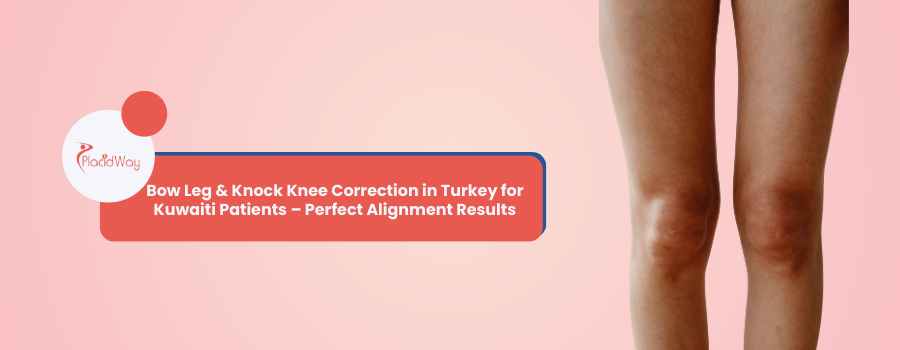
Yes, Kuwaiti patients can achieve perfect leg alignment in Turkey. Turkey offers advanced orthopedic centers, world-class medical expertise, and cutting-edge technology for bow leg and knock knee correction. Patients can expect significant savings, often 50-70% compared to Western countries. Turkey also boasts over 50 JCI-accredited hospitals, ensuring high standards of care.
For many individuals in Kuwait grappling with the physical discomfort and aesthetic concerns of leg deformities such as bow legs (Genu Varum) or knock knees (Genu Valgum), the prospect of achieving a pain-free, functionally aligned future is a significant aspiration. This crucial journey frequently leads them to the highly advanced orthopedic centers across Turkey. The country has established itself as a premier global destination for complex orthopedic procedures, drawing international patients with its exceptional blend of medical proficiency, state-of-the-art technological infrastructure, and remarkably affordable healthcare costs. From the vibrant metropolis of Istanbul to the specialized clinics in Ankara and Izmir, patients from Kuwait are discovering unparalleled care.
This extensive guide meticulously outlines the compelling reasons why Turkey is an outstanding choice for leg alignment correction surgery. It details the various procedures available, the myriad benefits, associated costs, and what Kuwaiti patients can anticipate during their medical journey towards ideal alignment. We thoroughly examine the advantages of selecting Bow Leg & Knock Knee Correction in Turkey for Kuwaiti Patients – Perfect Alignment Results, providing comprehensive insights to ensure a smooth, successful, and culturally comfortable experience for those seeking solutions for genu varum and genu valgum.
What are the Key Advantages for Kuwaiti Patients Choosing Leg Correction in Turkey?
- Significant Cost Savings: Leg alignment procedures in Turkey are often 50-70% more affordable than comparable treatments in the USA or UK, without compromising on medical quality. This makes high-quality care accessible to more patients.
- World-Class Medical Expertise: Many Turkish hospitals hold prestigious JCI accreditation, signifying adherence to rigorous international standards. They house highly experienced orthopedic surgeons specializing in complex limb deformity corrections.
- Comprehensive Treatment Packages: Packages often include essential services such as surgeon fees, anesthesia, hospital stays, post-operative care, and sometimes even additional support like airport transfers and accommodation assistance.
- Efficient Recovery and Rehabilitation: Modern surgical techniques combined with structured physiotherapy programs contribute to a quicker, more comfortable recovery period, helping patients regain strength and mobility effectively.
- Seamless and Culturally Familiar Travel: Turkey’s geographical proximity to Kuwait and its welcoming cultural environment make it a convenient and comfortable choice for Middle Eastern patients seeking medical care abroad.
What are Bow Legs (Genu Varum) and Knock Knees (Genu Valgum) and How are They Corrected?
Bow legs, known clinically as Genu Varum, describe an outward curvature of the legs, resulting in a distinct gap between the knees even when the ankles are touching. Conversely, knock knees, or Genu Valgum, is characterized by the knees touching or overlapping while the ankles remain separated, forming an inward angle.
These lower limb misalignments can originate from genetic predispositions, developmental anomalies, previous injuries, or underlying medical conditions such as rickets, various forms of arthritis, or metabolic bone diseases. Beyond their visual impact, these deformities can significantly impair quality of life, leading to persistent knee pain, uneven stress distribution on the joints, noticeable gait abnormalities, and an elevated risk of premature osteoarthritis. Surgical intervention, primarily osteotomy, is crucial for adults to address significant deformities. This precise procedure involves making a controlled cut in the bone—typically the tibia for bow legs or the femur for knock knees—to meticulously realign it.
The repositioned bone is then stabilized using internal fixation devices, such as plates and screws, to ensure optimal healing and correct weight distribution across the knee joint. For younger patients with remaining skeletal growth, guided growth surgery, or hemiepiphysiodesis, offers a less invasive option by temporarily influencing a growth plate to gradually straighten the limb. Advanced Turkish orthopedic centers frequently integrate sophisticated pre-operative 3D imaging and planning software, which allows surgeons to map out exact osteotomy cuts and angular corrections, thereby minimizing risks and maximizing the precision of the anatomical realignment, as highlighted by expert orthopedic insights. Such meticulous planning is key to achieving successful outcomes for patients undergoing knee alignment surgery.
Understanding Evidence-Based Outcomes and Potential Risks in Leg Correction Surgery
Evidence & Outcomes: Turkish medical tourism has seen remarkable growth, particularly in orthopedics, underpinned by a strong commitment to international patient safety standards. According to PlacidWay’s data, leading hospitals in major cities like Istanbul and Ankara hold Joint Commission International (JCI) accreditation, a global benchmark for quality and patient care. This ensures that the procedures, including complex limb deformity corrections, meet stringent international benchmarks. Patients undergoing bow leg and knock knee correction in Turkey report high satisfaction rates with both surgical outcomes and the comprehensive post-operative care, including rehabilitation services. This dedicated approach to recovery significantly contributes to excellent long-term functional results and an improved quality of life for international patients. Furthermore, Turkish orthopedic surgeons often possess extensive experience derived from high surgical volumes, ensuring a robust evidence base for positive patient outcomes.
Risks & Contraindications: While bow leg and knock knee correction surgery, predominantly osteotomy, is generally safe with experienced surgeons, it carries inherent risks. Potential complications include infection at the surgical site, damage to surrounding nerves or blood vessels, and issues with bone healing such as delayed union or non-union. There is also a possibility of over- or under-correction of the deformity, which might necessitate further intervention. Anesthesia-related complications, though rare, are also a consideration. Patients should be aware of warning signs like excessive swelling, severe pain unresponsive to medication, fever, or unusual drainage from the wound, and seek immediate medical attention if these occur. Individual results can vary widely based on the severity of the deformity, age, overall health, and adherence to post-operative instructions. It is crucial for patients to have a thorough discussion with a qualified orthopedic specialist to understand personalized risks and determine if surgery is the most appropriate course of action.
Did you know that Turkey is home to some of the world’s most advanced medical facilities, where patients often save significant amounts on orthopedic surgery for leg alignment while receiving care that meets or exceeds international hospital standards? This includes more than 50 JCI-accredited hospitals.
Unveiling the Cost of Leg Alignment Surgery in Turkey: A Global Comparison
The cost-effectiveness of bow leg and knock knee correction surgery is a primary driver for international patients choosing Turkey. While prices naturally fluctuate based on the specific surgical technique, the chosen hospital’s reputation, the surgeon’s experience, and the overall length of stay, a standard osteotomy for leg alignment in Turkey typically ranges from $6,000 to $12,000 USD. This comprehensive fee generally covers the surgeon’s charges, anesthesia, hospital facility fees, essential medical supplies, and several days of inpatient care. Many inclusive packages further extend to cover pre-operative diagnostic tests, initial physiotherapy sessions, and even airport transfers, providing excellent value without compromising quality. This makes Turkey an economically sound choice for Kuwaiti patients seeking permanent solutions for leg deformities.
Cost Breakdown
Major Savings
| Country | Estimated Cost | Average Savings |
|---|---|---|
| Turkey (Istanbul, Ankara) | $6,000 – $12,000 | Starting Point Best Value |
| United States | $20,000 – $40,000+ | 50-70% Savings |
| United Kingdom | $18,000 – $35,000+ | 40-65% Savings |
| Canada / Australia | $25,000 – $45,000+ | 60-75% Savings |
Essential Facts & Pro-Tips
Navigating the Leg Correction Journey for Kuwaiti Patients in Turkey
The medical journey for leg alignment correction in Turkey is structured to be comprehensive and supportive, ensuring a smooth experience from initial inquiry to post-operative recovery. This efficiency is a hallmark of the Turkish medical experience, minimizing downtime while ensuring every safety protocol is strictly followed. Kuwaiti patients can expect a streamlined process designed for their comfort and successful outcomes.
Frequently Asked Questions About Leg Alignment Correction in Turkey
1. Is this treatment safe in Turkey?+
Yes, leg alignment correction in Turkey is generally considered safe, particularly when performed at internationally accredited facilities. Many leading hospitals in Turkey, especially in cities like Istanbul and Ankara, hold Joint Commission International (JCI) accreditation. This global standard ensures adherence to strict patient safety protocols, quality of care, and organizational management. Turkish orthopedic surgeons are highly skilled and experienced, often trained at prestigious universities, further enhancing the safety profile for patients.
2. What exactly are bow legs (Genu Varum) and knock knees (Genu Valgum)?+
Bow legs, medically termed Genu Varum, describe a condition where an individual’s legs curve outwards, causing the knees to remain visibly apart even when their ankles are touching. Conversely, knock knees, or Genu Valgum, is the opposite deformity, characterized by the knees touching or even overlapping while the ankles are unable to meet. Both are common lower limb alignment issues that can lead to pain, gait abnormalities, and long-term joint problems.
3. Why are Kuwaiti patients increasingly choosing Turkey for leg alignment surgery?+
Kuwaiti patients are increasingly opting for Turkey due to its blend of high-quality, internationally accredited medical care and significantly more affordable treatment costs compared to Western countries. Turkey’s JCI-accredited hospitals and highly experienced orthopedic surgeons specializing in limb deformity correction offer reassurance. Additionally, the convenient travel options, cultural familiarity, and comprehensive patient support services contribute to a comfortable and accessible medical tourism experience for patients from Kuwait.
4. What surgical procedures are available for bow leg and knock knee correction in Turkey?+
The primary surgical intervention for adults is an osteotomy. This involves precisely cutting and reshaping the bone to correct its alignment, often stabilized with internal fixation. For younger patients who still have growth potential, guided growth surgery (epiphysiodesis) may be an option. Turkish surgeons utilize advanced techniques, including 3D imaging and planning software, to ensure precise corrections and optimal outcomes, tailored to the patient’s age and the severity of their deformity.
5. What is the typical recovery timeline after leg alignment surgery in Turkey?+
Recovery time varies, but generally, patients may need crutches for 6-8 weeks, gradually progressing to full weight-bearing. Many international patients choose to stay in Turkey for 2-3 weeks post-discharge to benefit from supervised early rehabilitation and intensive physiotherapy. Full recovery and a return to strenuous activities typically take 4-6 months, emphasizing the critical role of consistent physical therapy for optimal long-term outcomes.
6. Are there any effective non-surgical options for correcting bow legs or knock knees?+
For adults with significant bow leg or knock knee deformities, non-surgical methods are generally not effective in reshaping bones. Therefore, surgical correction is typically required to achieve lasting alignment. In children, some mild cases may spontaneously resolve, or be managed with bracing and observation if the deformity is minor. However, for persistent or severe pediatric cases, surgical intervention is often necessary to prevent future complications and ensure proper development.
7. How much does bow leg or knock knee correction typically cost in Istanbul, Turkey?+
The cost for bow leg or knock knee correction (osteotomy) in Turkey generally ranges from $6,000 to $12,000 USD. This competitive price often includes essential components such as surgeon fees, anesthesia, the hospital stay, and initial post-operative care. This represents a substantial saving compared to countries like the USA or UK, where similar procedures can cost upwards of $20,000-$40,000, making Turkey a highly attractive and affordable option.
8. Is consistent physical therapy a mandatory requirement after leg alignment surgery?+
Yes, physical therapy is an absolutely essential and non-negotiable component of a successful recovery following leg alignment surgery. It plays a critical role in restoring full range of motion, strengthening the muscles surrounding the knee and hip joints, and correcting any gait abnormalities. Comprehensive physiotherapy ensures the best possible long-term functional outcome, prevents stiffness, and accelerates the patient’s return to daily activities. Many medical packages in Turkey thoughtfully include initial physiotherapy sessions as part of the treatment plan.
Ready to Take the Next Step Towards Recovery?
Choosing the right destination for your medical care is significant. By opting for treatment abroad, you are not just saving on costs—you are gaining access to specialized clinicians and world-class care.