
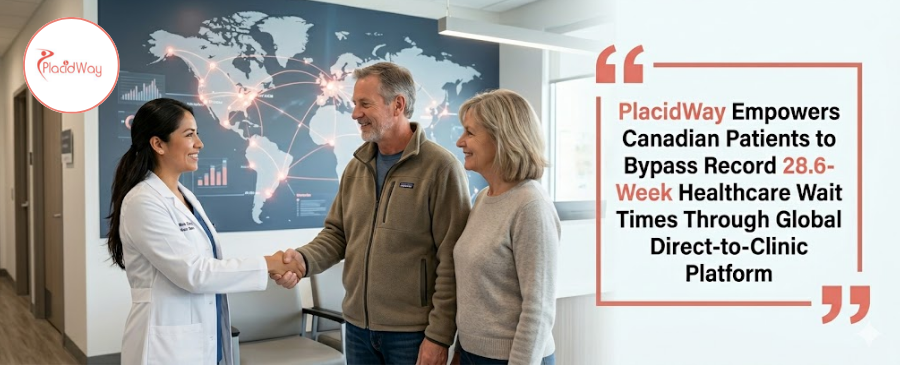
The Canadian healthcare system, long lauded for its accessibility and universal coverage, is currently experiencing an unprecedented operational crisis. Wait times for medically necessary treatments have reached historic highs, leaving countless patients in a state of physical and emotional limbo. According to the Official News Source, PlacidWay is spearheading a massive shift in how these individuals consume healthcare by empowering them to bypass these critical delays entirely. Through an innovative global direct-to-clinic platform, Canadians are no longer forced to wait months for life-changing surgeries.
The traditional model of waiting for a domestic referral, followed by a specialist consultation, and finally a surgical date, has broken down under the weight of systemic backlogs and resource shortages. In response, a massive wave of medical consumerism is taking hold. Patients are taking their health into their own hands, leveraging international medical travel to secure immediate appointments with highly accredited specialists in top-tier medical destinations across the globe.
The Anatomy of a Healthcare Crisis: Analyzing the 28.6-Week Wait
The statistic of a 28.6-week wait time is not merely a number; it represents a systemic failure that has profound implications for public health. This timeline reflects the median wait from the moment a general practitioner refers a patient to a specialist, to the actual receipt of the required medical treatment. For many complex specialties, the wait can stretch far beyond this median, easily eclipsing a full calendar year. The structural bottlenecks contributing to this crisis are multifaceted, rooted in a combination of an aging population, an increasing prevalence of chronic diseases, severe shortages of specialized medical personnel, and the lingering aftershocks of global health disruptions.
Furthermore, the geographical vastness of Canada exacerbates these delays, particularly for patients residing outside major metropolitan hubs who must travel long distances simply to join a waitlist. The resulting backlog creates a triage environment where only the most immediately life-threatening cases are expedited, pushing those with debilitating but non-fatal conditions—such as severe osteoarthritis requiring joint replacement or chronic back pain needing spinal fusion—to the back of the queue. This prolonged state of waiting is transforming acute, treatable conditions into chronic, unmanageable states of suffering.
Prolonged waiting periods for orthopedic surgeries can lead to irreversible muscle atrophy and joint degradation. Research indicates that patients who wait longer than six months for joint replacements often experience significantly longer rehabilitation periods and inferior post-operative mobility compared to those who receive timely intervention.
The Hidden Costs of Waiting for Medical Treatment in Canada
While the Canadian system is ostensibly free at the point of care, the hidden costs of waiting are astronomical. The physical deterioration experienced during a 28.6-week delay often means that by the time a patient finally reaches the operating table, their condition has significantly worsened. A knee requiring a simple arthroscopy might degrade to the point of necessitating a total joint replacement. A localized tumor may grow or metastasize. This biological cost is compounded by an increased dependency on pharmacological interventions, particularly prescription painkillers and opioids, which carry their own severe risks of addiction and adverse side effects.
Beyond the physical toll, the economic and psychological burdens are devastating. Patients trapped on waitlists frequently experience lost wages due to an inability to work, forced early retirement, or diminished productivity. Family members often must reduce their own working hours to act as temporary caregivers. Psychologically, the uncertainty and chronic pain breed anxiety, depression, and a profound sense of helplessness. The financial strain of lost income combined with a rapidly diminishing quality of life creates a hidden tax that Canadian patients are paying every single day they remain on a waitlist.
How the Global Direct-to-Clinic Platform Changes the Equation
The introduction of a direct-to-clinic platform represents a monumental paradigm shift in medical tourism. Historically, seeking treatment abroad was a fragmented, opaque process heavily reliant on medical concierge intermediaries who charged exorbitant fees while offering limited transparency. PlacidWay’s revolutionary platform eliminates these convoluted layers, providing Canadian patients with a direct, streamlined conduit to internationally accredited healthcare facilities. By utilizing digital health infrastructure, patients can now independently research destinations, view transparent pricing, and communicate directly with medical boards abroad.
This democratization of healthcare access means that the power dynamics have shifted entirely. Instead of being passive participants in a domestic queue, patients are now active global consumers. The platform facilitates the secure transfer of medical records, comprehensive virtual consultations, and customized treatment plans before the patient ever boards a plane. This seamless integration ensures that when a Canadian patient arrives in a destination like Mexico, Costa Rica, or Turkey, their treatment protocol is already established, their surgical team is fully briefed, and their recovery pathway is meticulously mapped out.
“The revelation that Canadian patients are waiting an average of 28.6 weeks for medically necessary treatments is not just a statistic; it is a profound human crisis. By utilizing our direct-to-clinic platform, we are tearing down the borders of traditional healthcare delivery. We are empowering individuals to reclaim their health, their mobility, and their dignity without being held hostage by systemic domestic backlogs.”
— Pramod Goel, CEO of PlacidWay
Top Medical Procedures Canadians are Seeking Abroad
Because of the diverse nature of the healthcare delays, Canadians are utilizing the direct-to-clinic platform to seek a wide array of specific medical interventions. The most sought-after categories reflect the areas where domestic wait times are the most severe and impactful.
- Orthopedic Surgery: Joint replacements, including total knee and hip arthroplasties, alongside spinal fusions and disc replacements, are the primary drivers of medical travel. Patients suffering from severe mobility limitations refuse to wait the typical eight to twelve months for domestic care.
- Bariatric Weight Loss Surgery: Due to stringent qualification criteria and multi-year waitlists in Canada, procedures like Gastric Sleeve and Gastric Bypass are highly sought after internationally to combat metabolic diseases and severe obesity immediately.
- Complex Dental Restorations: Because dental care is largely excluded from Canada’s universal health coverage, the prohibitive out-of-pocket costs drive patients abroad for full-mouth restorations, all-on-4 dental implants, and complex maxillofacial surgeries.
- Cardiovascular Procedures: Non-emergency angioplasties, heart valve replacements, and specific cardiovascular screenings that face long diagnostic bottlenecks at home are prioritized by patients looking to mitigate the risk of sudden cardiac events.
- Advanced Fertility Treatments: With high domestic costs and lengthy waits for specialized IVF protocols, couples are turning to international centers of excellence for affordable, immediate, and highly advanced reproductive medicine.
- Elective and Cosmetic Surgeries: Procedures that do not qualify for public funding, yet significantly impact mental health and well-being, are easily scheduled via global platforms without the premium pricing found in North America.
Quality Assurance and Patient Safety in International Medical Travel
One of the most significant barriers to medical tourism in the past was the perception of compromised quality or safety. The modern direct-to-clinic platform effectively dismantles this misconception by enforcing rigorous, transparent vetting processes. The facilities integrated into these platforms are often accredited by the most prestigious global health organizations, such as the Joint Commission International (JCI). This accreditation guarantees that the hospital operates under strict international standards regarding infection control, surgical safety protocols, and patient care management, often mirroring or exceeding the standards found in Canadian institutions.
Moreover, many of the specialists operating in these top-tier international destinations are board-certified globally, having completed fellowships or extensive training in the United States, the United Kingdom, or Canada. The platform provides full visibility into a surgeon’s credentials, patient outcomes, and clinical history. This level of transparency ensures that Canadian patients are not taking a leap of faith, but rather making a highly informed, data-driven decision to trust world-class experts with their medical care.
Many international medical facilities operate explicitly to cater to global medical travelers. These state-of-the-art centers feature multilingual staff, dedicated international patient departments, and luxury recovery suites, ensuring that the cross-border healthcare experience is as seamless and stress-free as possible.
The Economic Realities: Cost Comparisons and Financial Viability
When evaluating the decision to seek healthcare internationally, the economic calculus extends far beyond the price tag of the surgery itself. While it is true that many procedures abroad cost 40% to 70% less than their private North American counterparts, the true financial advantage for Canadians lies in mitigating the cost of waiting. If a Canadian patient is unable to work for eight months while waiting for a spinal fusion, the lost income vastly exceeds the out-of-pocket expense of traveling abroad to receive the surgery next week.
The direct-to-clinic model optimizes this financial viability by offering bundled, all-inclusive pricing structures. These transparent packages typically cover the surgical fees, anesthesia, pre-operative diagnostics, hospitalization, ground transportation, and even accommodation for a companion. By eliminating hidden agency fees and providing fixed-price guarantees, the platform allows patients to budget with absolute certainty. When factoring in the rapid return to the workforce and the elimination of expensive, long-term pain management medications, the return on investment for international medical travel becomes undeniably clear.
Empowering Patients: The Role of Technology in Medical Tourism
The success of the direct-to-clinic model is inextricably linked to rapid advancements in digital health technology. PlacidWay’s ecosystem acts as a centralized command center for the patient’s entire medical journey. Through highly secure, HIPAA-compliant communication portals, patients can upload their domestic MRI scans, X-rays, and blood work for immediate review by international specialists. This technological bridge eradicates geographical borders, allowing a specialist in Central America or Eastern Europe to evaluate a Canadian patient’s case with the exact same precision as a local physician.
Telehealth integrations further enhance this empowerment. Patients conduct extensive video consultations with their prospective surgical teams, allowing them to ask critical questions, establish rapport, and build trust long before making financial commitments. Post-operative care is also revolutionized by this technology. Following the return to Canada, patients remain connected to their international surgical teams through remote monitoring and virtual follow-ups. This continuity of care ensures that any potential complications are addressed swiftly, providing an ongoing safety net that extends well beyond the physical walls of the foreign hospital.
A Paradigm Shift in North American Healthcare Consumption
The mass migration of Canadian patients toward global medical solutions signifies a fundamental shift in healthcare consumption. No longer constrained by the narrative that they must endure systemic delays, citizens are redefining what it means to have access to healthcare. The reliance on a single, overloaded domestic system is being replaced by a diversified, global approach where the patient acts as the ultimate decision-maker regarding their own bodily autonomy and timelines.
As the 28.6-week wait time continues to threaten the physical and economic well-being of Canadians, the direct-to-clinic platform will undoubtedly become an even more integral component of the North American health landscape. PlacidWay is at the forefront of this revolution, building the vital infrastructure necessary to connect patients in crisis with the global medical community. Ultimately, this movement is not just about crossing borders for surgery; it is about restoring dignity, ending unnecessary suffering, and proving that timely, exceptional medical care is a global human right.
Ready to Bypass the Waitlist?
Take control of your health today. Connect directly with world-class medical facilities and access the immediate care you deserve.