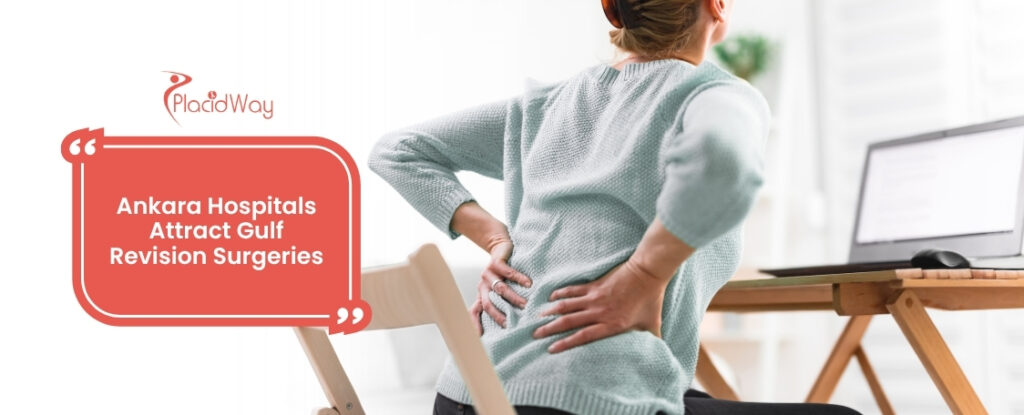
Patients from the Gulf states are increasingly bypassing traditional Western healthcare markets, flocking instead to the Turkish capital for complex orthopedic surgeries, driven by world-class medical standards and geographical convenience.
This rapid shift in international medical tourism patterns has been documented extensively over the past year, with recent healthcare industry reports confirming the undeniable trend. As noted in the Official News Source, Ankara has firmly established itself as a premier regional hub for high-acuity joint reconstruction. By merging rigorous international accreditation standards with cutting-edge surgical technologies, the city’s elite medical institutions are redefining what is possible in the realm of complex orthopedic interventions.
The Rising Demand for Advanced Orthopedic Care in the Gulf
Over the past two decades, nations within the Gulf region have seen a significant increase in primary joint replacement surgeries. A combination of changing lifestyles, increased life expectancy, and a high prevalence of conditions such as osteoarthritis and rheumatoid arthritis created a surge in the need for primary hip arthroplasty. However, joint implants have a finite lifespan, typically ranging from fifteen to twenty years depending on patient activity levels and the materials used. Today, the initial wave of patients who received these primary implants in the early 2000s are now facing the inevitable need for revision surgeries due to normal wear and tear, aseptic loosening, or implant failure.
While local healthcare systems in the Gulf have improved dramatically, the sheer volume and complexity of revision surgeries often exceed regional capacities. Revision hip arthroplasty requires a distinctly different skill set and infrastructure compared to primary replacements. Consequently, patients and state-sponsored medical travel boards are looking beyond their borders to find institutions that possess the highly specialized multidisciplinary teams required to execute these demanding procedures flawlessly. This search for uncompromising quality has inevitably led them to the medical corridors of Ankara.
Did You Know?
Revision hip replacement surgeries account for nearly 15% of all hip arthroplasties performed globally each year. Because these procedures often involve removing old cement, addressing severe bone loss, and utilizing custom-engineered implants, they take significantly longer to perform and require highly advanced intensive care support compared to first-time joint replacements.
Why Ankara is Becoming the Premier Destination for Joint Reconstruction
When international patients consider medical travel to Turkey, coastal cities or bustling commercial hubs often come to mind first. However, Ankara holds a unique and prestigious position as the nation’s administrative and academic capital. The city is home to the country’s most esteemed medical universities and research centers. This academic foundation has fostered a highly competitive and intellectually rigorous environment, attracting the most brilliant medical minds and dedicated orthopedic surgeons in the region.
The healthcare infrastructure in Ankara is specifically designed to handle complex, high-acuity medical cases. Unlike centers that focus primarily on elective aesthetic procedures, Ankara’s mega-hospital complexes are built to manage severe traumas, complex oncology cases, and intricate joint reconstructions. The city offers a calmer, more controlled environment for recovery, away from the intense crowds of other metropolitan areas. For Gulf patients navigating the physical and emotional challenges of a major mobility-restoring surgery, the tranquility and sheer clinical excellence found in Ankara provide an ideal setting for healing and rehabilitation.
The Importance of JCI Accreditation in High-Stakes Surgeries
When dealing with secondary joint operations, the margin for error is virtually nonexistent. This is where Joint Commission International (JCI) accreditation becomes a critical deciding factor for international patients. JCI is widely considered the global gold standard for healthcare quality and patient safety. Institutions in Ankara that hold this prestigious seal have demonstrated absolute compliance with hundreds of rigorous standards covering everything from infection control and medication management to emergency preparedness and surgical protocols.
For a complex hip revision, infection prevention is paramount. Periprosthetic joint infections are among the most devastating complications that can occur, often necessitating multiple surgeries to resolve. JCI-accredited facilities in Ankara utilize state-of-the-art laminar airflow operating theaters, stringent sterilization tracking, and strict antibiotic stewardship programs to mitigate these risks. Furthermore, this accreditation ensures that multidisciplinary teams—comprising orthopedic surgeons, anesthesiologists, infectious disease specialists, and physiotherapists—work in seamless, documented coordination to optimize patient outcomes.
“The shift towards Ankara for high-acuity orthopedic procedures is not a coincidence. Gulf State patients demand rigorous safety standards, and the concentration of JCI-accredited facilities in the Turkish capital provides an unparalleled level of clinical assurance for something as intricate as a complex hip revision. These institutions represent the pinnacle of medical excellence, merging advanced surgical capabilities with deeply ingrained patient-centric care protocols.”
— Pramod Goel, CEO of PlacidWay
Understanding the Complexity of Hip Revision Procedures
To fully grasp why patients travel thousands of miles to access specialized care in Ankara, one must understand the sheer technical difficulty of a hip revision procedure. Unlike a primary replacement where the surgeon works with virgin bone, a revision surgery presents a multitude of anatomical and mechanical challenges:
- Implant Extraction: Surgeons must carefully remove the original prosthetic components, which are often deeply ingrown into the patient’s natural bone or firmly cemented in place, without causing further fractures.
- Severe Bone Loss Management: Osteolysis (bone destruction) often occurs around failing implants. Surgeons in Ankara utilize advanced bone grafting techniques, trabecular metal augments, and customized implants to rebuild the pelvic and femoral structures.
- Soft Tissue Compromise: Previous surgeries leave behind dense scar tissue. Managing the soft tissue envelope is crucial to ensure the new joint remains stable and does not dislocate post-operatively.
- Infection Eradication: If the original joint failed due to infection, the surgical team must perform a complex two-stage revision, involving the temporary placement of antibiotic-loaded spacers before the final implant is inserted months later.
- Extended Surgical Duration: These procedures routinely take several hours longer than primary surgeries, demanding exceptional stamina from the surgical team and advanced intraoperative anesthetic management.
- Custom Prosthetics: Due to altered anatomy, standard off-the-shelf implants are rarely sufficient. High-end facilities rely on 3D printing and precise modular implants tailored to the exact specifications of the patient’s remaining bone stock.
Advanced Technologies Used in Modern Hip Revisions
The success rates of complex joint reconstruction in Ankara are heavily bolstered by the adoption of next-generation medical technologies. Premier facilities continuously invest in state-of-the-art diagnostic and surgical equipment, ensuring that their orthopedic departments remain at the bleeding edge of medical science. Pre-operative planning often involves high-resolution CT scans that are converted into 3D virtual models, allowing surgeons to practice the implant extraction and placement on a computer screen long before the first incision is made.
In the operating room, robotic-assisted surgical platforms and advanced computer navigation systems have become a standard of care for complex cases. These tools provide real-time, sub-millimeter feedback to the surgical team, ensuring optimal alignment and biomechanical restoration of the new joint. Furthermore, the use of dual-mobility bearings and highly cross-linked polyethylene components has dramatically reduced the risk of post-surgical dislocation, offering patients a wider, safer range of motion and an improved overall quality of life.
Did You Know?
Medical tourism contributes billions of dollars annually to the Turkish economy, with advanced orthopedics and traumatology ranking among the top three highest revenue-generating medical specialties. The country’s strategic geographical location allows patients from over 50 countries, including the entire Gulf Cooperation Council (GCC) region, to reach the capital via a direct flight of under four hours.
The Economics of Medical Tourism for Orthopedic Procedures
Historically, patients from the Gulf seeking specialized medical treatments would travel to destinations like the United States, the United Kingdom, or Germany. However, the global healthcare landscape is rapidly evolving, with a growing emphasis on value-based care. The cost of a complex hip revision in North America or Western Europe can easily exceed the budgets of even the most affluent private patients or government health ministries, especially when factoring in the extended hospital stays, rehabilitation, and travel costs for accompanying family members.
Ankara disrupts this traditional economic model by offering absolute clinical parity—and often superiority—at a fraction of Western costs. The favorable exchange rate, combined with strong government subsidies for medical infrastructure, allows top-tier facilities to price their procedures highly competitively. This democratization of elite healthcare means that state health boards in the Gulf can treat more patients with their allocated budgets, while self-paying individuals can afford the absolute highest echelon of medical care, complete with extended inpatient rehabilitation programs that would be cost-prohibitive elsewhere.
Comprehensive Care Pathways for International Patients
Undergoing a major revision surgery in a foreign country can be a daunting prospect, which is why the patient experience in Ankara is meticulously curated from the moment of first contact. The journey begins long before the patient boards a plane, utilizing secure telemedicine platforms where patients and their local doctors can consult directly with the Turkish surgical teams. Comprehensive reviews of medical histories, imaging, and surgical strategies are discussed openly, ensuring that the patient is physically and psychologically prepared for the procedure.
Upon arrival, the experience resembles a high-end hospitality service seamlessly blended with intensive medical care. Patients are greeted at the airport and transported via dedicated medically equipped vehicles. Dedicated international patient departments assign multilingual case managers who fluent in Arabic and English, ensuring zero communication barriers. Facilities offer culturally tailored amenities, including Halal-certified dining, dedicated prayer spaces, and VIP suites that comfortably accommodate family members. Post-operatively, the focus shifts to intensive, supervised physical therapy within the hospital setting, ensuring the patient is confidently mobile before receiving medical clearance to return home.
Future Trends in Orthopedic Medical Travel to Turkey
Looking ahead, the synergy between Gulf state healthcare demands and Ankara’s medical capabilities is poised to strengthen even further. As the population demographics in the Middle East continue to age, the volume of joint revision surgeries is projected to grow exponentially over the next decade. To meet this demand, leading healthcare institutions in the Turkish capital are heavily investing in specialized “centers of excellence” dedicated entirely to joint reconstruction and biomechanical research, drawing international talent and fostering cross-border academic exchanges.
Furthermore, the integration of Artificial Intelligence into diagnostic imaging and predictive outcome modeling will revolutionize how complex orthopedic cases are assessed. We are also witnessing the rapid expansion of digital health ecosystems, where post-operative telerehabilitation allows Turkish surgical teams to monitor a patient’s physical therapy progress via smart wearables long after they have returned to their home country. As these innovations take root, Ankara will not merely be an alternative destination for complex hip revisions, but rather the undisputed global standard-bearer for international orthopedic care.
Ready to Explore World-Class Orthopedic Care?
Discover elite JCI-accredited facilities and highly specialized orthopedic teams equipped to handle the most complex joint reconstructions. Let PlacidWay guide your journey to renewed mobility.